

- Published on: 2026-01-09 09:56:00
5 Most Popular Technical Indicators and How to Use Them
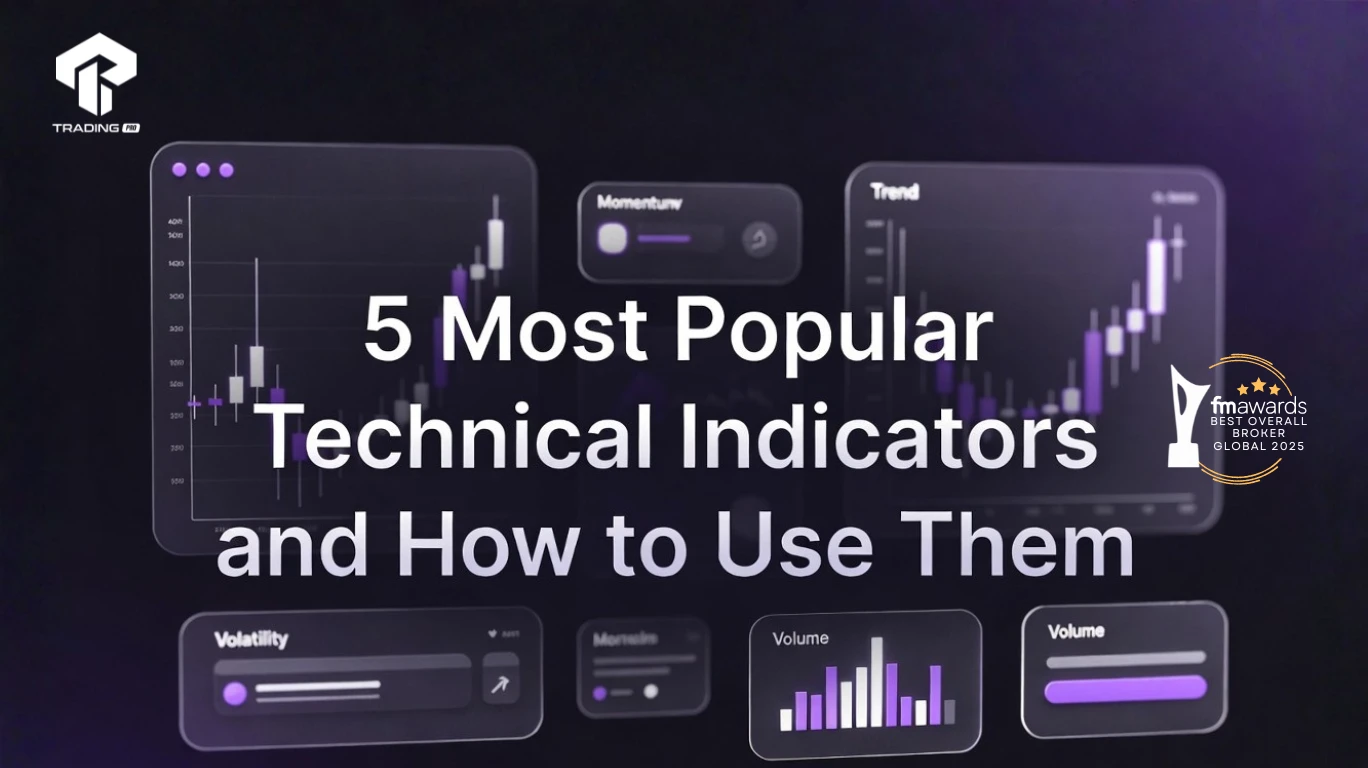
Many beginner traders believe that using more indicators will lead to better results. In reality, this often creates confusion. The real key is understanding the best technical indicators for trading and knowing how to use technical indicators correctly.
One clear indicator used properly is often more effective than many indicators used randomly.
This article provides technical indicators explained in a simple way, covering the most popular trading indicators, how they work, and how traders commonly apply them for decision-making.
What Are Technical Indicators?
Technical indicators are mathematical tools derived from price, volume, or volatility data. They help traders analyze market conditions and are widely used when using indicators for entry and exit.
Indicators are generally grouped into:
- Leading vs lagging indicators
- Leading indicators attempt to signal potential reversals
- Lagging indicators confirm trends after they develop
Understanding this difference helps traders avoid unrealistic expectations.
1. Relative Strength Index (RSI)
The relative strength index RSI is one of the most widely used momentum indicators for trading. It measures how strong or weak recent price movements are.
How traders typically use RSI:
- Identify overbought and oversold conditions
- Avoid entering trades when momentum is already exhausted
- Confirm trend strength
RSI is popular because it is easy to read and works across many markets.
2. Moving Average Convergence Divergence (MACD)
The moving average convergence divergence MACD is a trend-following indicator that compares two moving averages.
Common MACD uses include:
- Confirming trend direction
- Identifying momentum shifts
- Improving timing after pullbacks
MACD is a classic lagging indicator that works best in trending markets.
3. Moving Averages (SMA & EMA)
Moving averages help smooth price movement and highlight trends. Traders often combine simple moving average strategies with exponential moving average EMA for better responsiveness.
Typical uses:
- Identifying trend direction
- Acting as dynamic support or resistance
- Filtering low-quality trade setups
Moving averages are often among the first tools traders learn when setting up technical indicators.
4. Bollinger Bands
The bollinger band's trading strategy focuses on volatility. Bollinger Bands expand during high volatility and contract when markets are quiet.
Traders commonly use Bollinger Bands to:
- Identify overextended price movements
- Anticipate potential breakouts
- Improve entry timing during volatility shifts
5. Stochastic Oscillator
Stochastic oscillator signals compare the closing price to its recent range, helping traders spot momentum changes early.
This indicator is often used to:
- Identify potential reversals
- Refine entries in ranging markets
- Improve short-term timing
Other Popular Technical Indicators Worth Knowing
Beyond the top five, traders also explore:
- Average true range ATR usage to measure volatility and manage risk
- On balance volume OBV explained to analyze buying and selling pressure
- Using fibonacci retracement to identify potential pullback zones
- Ichimoku cloud trading for trend and momentum context
- Parabolic SAR in trading for trailing stops and trend confirmation
- Volume indicators in trading to validate breakouts and reversals
These tools are best used selectively, not all at once.
How to Use Technical Indicators Effectively
Learning how to use technical indicators is less about adding more tools and more about clarity.
Best practices include:
- Combine indicators with price action
- Avoid indicators that measure the same thing
- Define risk before every entry
Indicators support decisions—they don’t make decisions for you.
Common Mistakes When Using Indicators
Many beginners struggle because they:
- Stack too many indicators
- Ignore market context
- Rely on indicators without confirmation
Understanding technical indicators explained properly helps traders avoid these mistakes and trade more consistently.
Final Thoughts
Technical indicators are powerful tools when used correctly. By understanding leading vs lagging indicators, focusing on the best technical indicators for trading, and applying them with discipline, traders can greatly improve decision-making.
The goal is not to predict the market, but to respond to it clearly.
Start Trading with TradingPRO
Now that you understand how popular technical indicators work, the next step is applying them in real market conditions.
TradingPRO provides advanced charting features, customizable indicator settings, and professional tools to help traders analyze the market efficiently.
Start trading today with TradingPRO and build your skills step by step.
Connect with TradingPRO
Stay updated with market insights and educational content from TradingPRO:
Instagram | X / Twitter | Facebook | Telegram | LinkedIn


