




- Published on: 2026-11-18 02:53:00
False Breakouts and Market Reversals: How to Identify Potential Trading Signals
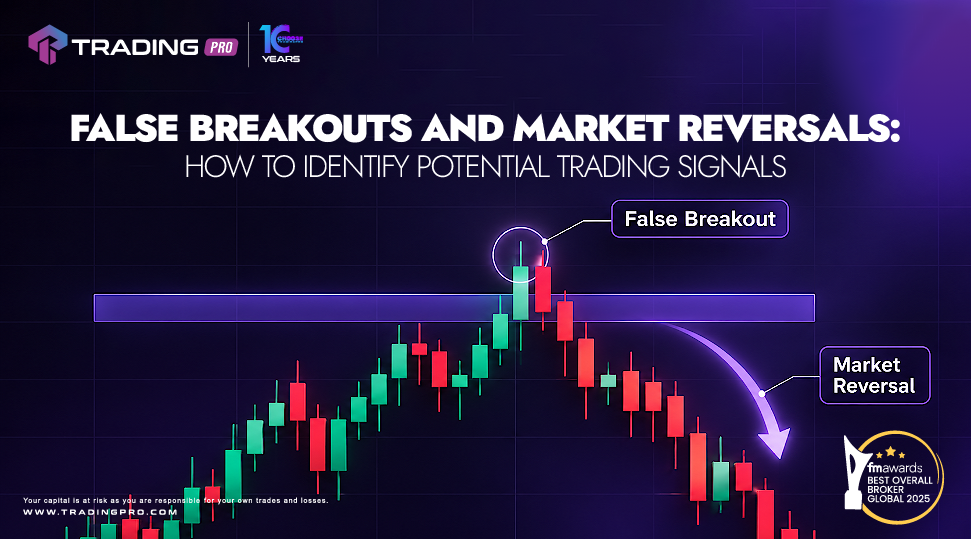
1. What Is a False Breakout?
A false breakout occurs when the price moves beyond an established support or resistance level but fails to maintain that movement. Instead of continuing in the breakout direction, the market reverses and returns within its previous trading range. This can create misleading signals for traders who enter a position based only on the initial price movement. In CFD trading, recognising potential false breakouts is important because sudden price changes can affect leveraged positions. Traders can use price action, technical indicators, and confirmation signals to assess whether a breakout may have enough momentum to continue.
2. Understanding Market Reversals
A market reversal occurs when the prevailing price direction changes from upward to downward or from downward to upward. Reversals can develop following changes in market sentiment, economic announcements, shifts in supply and demand, or changes in technical conditions. However, a temporary pullback does not necessarily indicate a complete reversal. Traders often examine price structure, momentum, and important support and resistance areas to assess whether the market direction may be changing. Understanding the difference between a short-term correction and a potential reversal can help traders avoid decisions based on isolated price movements.
3. Why Do False Breakouts Occur?
False breakouts can happen for several reasons, including insufficient buying or selling pressure, changing market sentiment, and increased volatility around important price levels. Economic announcements may also cause sudden movements that are not sustained once the initial reaction settles. In some situations, prices move beyond a technical level briefly before returning to the previous range. This is why traders should avoid treating every breakout as confirmation of a new trend. Waiting for a candle close, a retest, or additional technical confirmation may provide a clearer view of market conditions.
4. How Can Traders Identify a Potential False Breakout?
Identifying a potential false breakout requires more than observing price moving above resistance or below support. Traders may examine whether the price closes beyond the level, how strongly it moves, and whether subsequent candles support the breakout direction. A quick return into the previous range may indicate that the movement lacked sufficient momentum. Other useful observations include changes in volatility, momentum indicators, and price behaviour during a retest. No single signal can confirm a false breakout with certainty, so combining different forms of analysis can provide a more balanced assessment.
5. The Role of Support and Resistance Levels
Support and resistance levels are important areas where buying or selling pressure has previously influenced price movements. Support may act as an area where downward movement slows, while resistance may act as an area where upward movement faces pressure. These levels are not exact barriers, and prices can move beyond them temporarily or break through them completely. Traders often use historical price action to identify these areas and monitor how the market reacts when approaching them. Understanding these zones can help traders plan potential entry and exit points while considering the possibility of false breakouts.
6. Can Technical Indicators Help Identify Market Reversals?
Technical indicators can provide additional information about momentum, volatility, and possible changes in market direction. Tools such as the Relative Strength Index (RSI), Moving Averages, and the Ichimoku Cloud can help traders assess market conditions alongside price action. For example, RSI may highlight momentum conditions, while moving averages can help identify the broader trend. The Ichimoku Cloud combines several components to provide information about trend direction and potential support and resistance areas. Traders can explore these analytical tools through TradingPRO's MetaTrader 4 platform and MetaTrader 5 platform. Indicators should support analysis rather than be treated as guaranteed signals.
7. Common Mistakes When Trading False Breakouts
One common mistake is entering a position immediately after the price crosses a support or resistance level without waiting for confirmation. Other mistakes include ignoring the wider market trend, relying on a single indicator, and placing Stop Loss orders without considering current volatility. Some traders may also increase their position size after an unsuccessful entry in an attempt to recover losses. These behaviours can increase risk, especially when trading leveraged CFDs. Developing clear entry criteria and reviewing previous decisions can help traders identify recurring mistakes and improve their approach.
8. How Does Risk Psychology Apply to False Breakouts?
Trading potential breakouts and reversals requires patience and an understanding of how emotions can influence decisions. A trader who enters a position too quickly may become frustrated if the breakout fails, potentially leading to impulsive decisions or attempts to recover losses. Establishing risk limits, choosing an appropriate position size, and following a structured trading plan can help reduce emotional reactions. Understanding the psychological side of risk management is equally important. TradingPRO's Level 6 – Risk Psychology course offers an educational resource for exploring how emotions and risk perception can influence trading behaviour. Stop Loss orders can also help manage exposure, although execution at the exact requested price is not guaranteed during fast-moving markets or price gaps.
9. Building a More Informed Approach to False Breakouts
False breakouts and market reversals are common features of financial markets, making it important for traders to understand how prices behave around key technical levels. Combining price action with technical indicators, waiting for confirmation, and applying consistent risk-management rules can support more structured decision-making. Traders should also remember that no technical setup guarantees a particular market outcome.
With TradingPRO, traders can explore platforms such as MetaTrader 4 and MetaTrader 5 and review account options according to their trading needs. To learn more about the available platforms and account options, visit the TradingPRO Social Media and website .


