


- Published on: 2026-10-19 17:02:00
Is Egypt Being Dragged Into the Houthi War? Cairo's Saudi Pledge Raises the Stakes
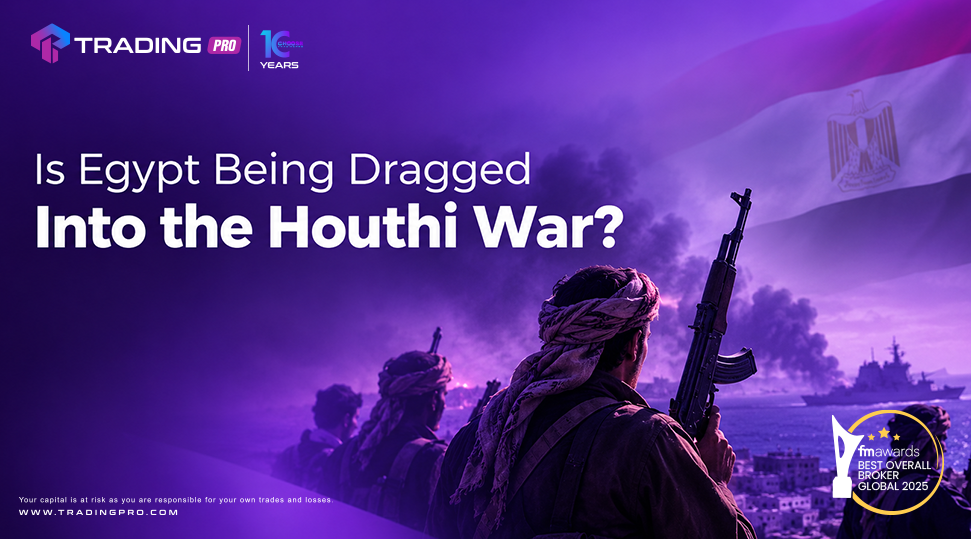
Egypt has promised "all necessary and possible forms of support" to Saudi Arabia as Houthi attacks intensify and the risk of a wider regional conflict grows. The pledge, reported by Semafor on 18 October 2026, is one of the more notable diplomatic and security developments in the region this month. For anyone who follows global markets, headlines like this are worth understanding, because Middle East tensions have a long record of shaping sentiment across energy, currencies and safe-haven assets.
In this article, we break down what was reported, why Cairo's move matters, what the coverage does not yet tell us, and how traders can think about geopolitical risk without reacting to every headline.
What Egypt Pledged
According to Semafor's report, Egypt pledged "all necessary and possible forms of support" to Saudi Arabia. The announcement comes as intensifying Houthi attacks raise the risk of a widening regional conflict.
The pledge did not stop at words. After the announcement, President Abdel Fattah el-Sisi requested an urgent parliamentary session to authorize military action. Semafor says this brings the Arab world's largest army a step closer to direct involvement, and describes the move as a shift in Cairo's posture.
Why This Is a Shift for Cairo
Semafor frames the pledge as a change in how Egypt positions itself in the conflict. Moving from diplomatic backing toward a possible authorization of military action is a significant step for any government, and even more so for the country with the largest army in the Arab world.
There is still a limit to how far Egypt has gone. The report notes that Egypt stopped short of joining the mutual defense agreement between Saudi Arabia, Türkiye and Pakistan. In other words, Egypt is signalling strong support and preparing the legal ground for possible action, but it has not formally signed up to that defense arrangement.
A Saudi columnist writing in Asharq Al-Awsat argued that Egypt has effectively become a participant in the war, whether it wants to or not. That is an opinion, and it should be read as one, but it shows how some regional commentators already see the situation.
The Economic Pressure on Egypt
Security is only part of the picture. Semafor reports that Egypt is losing billions of dollars every year from Houthi strikes. The article does not give an exact figure, so we will not either, but the direction is clear: ongoing attacks carry a real financial cost for Egypt, and that gives Cairo its own reasons to want the situation contained.
For traders, this is the kind of detail that matters. When a government's income is under pressure and its political stance is changing at the same time, markets tend to pay attention. Currency traders in particular often follow how regional events could affect the outlook of the countries involved.
The Saudi Connection
The second driver is the relationship with Riyadh. Semafor describes Saudi Arabia as a major financial backer of Egypt, saying it has provided billions of dollars in aid and investment. The pledge signals closer alignment between the two countries.
That alignment has both a political and an economic side. A government that relies on a partner for financial support has good reason to stand beside that partner when it comes under pressure. Whether or not that was the main motive here, the article presents the two as closely linked.
What the Reports Do Not Yet Tell Us
A good analysis separates what is known from what is not. The Semafor article leaves several important questions open:
- Troop numbers and timing: There are no figures, no timeline and no deployment details.
- Parliament's vote: The article does not say when parliament will vote, or whether it already has.
- Losses and aid: There are no exact figures for Egypt's losses or for Saudi aid.
- The attacks themselves: The report does not describe targets or casualties, and it does not discuss any market impact.
- Saudi Arabia's request: It is not stated whether Riyadh has asked for Egyptian military help.
These gaps matter. Headlines often move faster than the facts behind them, and a pledge of support is not the same thing as a confirmed deployment. Until more details are confirmed, it is sensible to treat the story as developing.
Why Traders Pay Attention to Geopolitical Headlines
The Middle East plays a central role in global energy supply and trade routes, so tension in the region often draws attention from market participants. While the Semafor article itself does not discuss market effects, traders commonly watch a few areas when conflict risk rises:
- Oil and energy markets: Concerns about supply or shipping routes can influence crude oil sentiment.
- Gold: Gold is widely seen as a safe-haven asset and can attract interest when uncertainty increases.
- Major currencies: Safe-haven flows can affect currencies such as the US dollar, while regional currencies may react to local developments.
- Volatility: Sudden headlines can widen spreads and produce sharp price swings, especially around news releases.
None of this means a particular market will move in a particular direction. Reactions depend on how developments unfold and on what is already priced in. The point is that geopolitical news is a source of volatility, and being prepared for it is part of trading well.
How to Approach Trading Around Headline Risk
Periods of regional tension tend to reward preparation over reaction. A few habits can help:
- Verify before you act. Confirm key facts from reliable sources. Early reports can change quickly, and a pledge is not a confirmed deployment.
- Know the calendar. If a parliamentary vote or an official statement is expected, understand that price action may be fast around those moments.
- Size positions carefully. Volatile conditions can move prices further and faster than expected, so position size and leverage deserve extra thought.
- Use stop-loss levels. Define in advance where you would exit if the market moves against you, rather than deciding in the middle of a spike.
- Keep the bigger picture in view. One headline rarely tells the whole story. Look at how several markets are behaving together before drawing conclusions.
Trading forex and CFDs involves risk, and geopolitical events can make conditions less predictable. A clear plan matters more than a quick reaction.
What to Watch Next
The next developments to follow are the outcome of the parliamentary session Sisi requested, any official detail on what kind of support Egypt would provide, and whether Cairo moves closer to the Saudi, Turkish and Pakistani defense agreement. Any statement on how the Houthi attacks are affecting trade or regional stability would also add useful context.
For now, the confirmed picture is straightforward. Egypt has pledged strong support to Saudi Arabia, its president has asked parliament to authorize military action, and the country is under economic pressure from the attacks. The rest remains to be seen.
Stay Ahead of Market-Moving News
Geopolitical events can shape market conditions quickly, and having a trading account ready lets you act on your own plan when opportunities appear. Create your TradingPRO account today: Sign up here. To keep up with updates and market insights from our team, follow us on socials: TradingPRO on socials.


