



- Published on: 2026-11-11 12:48:00
Nvidia Falls Nearly 10% in Two Sessions as Board Probes Reports Involving CEO Jensen Huang
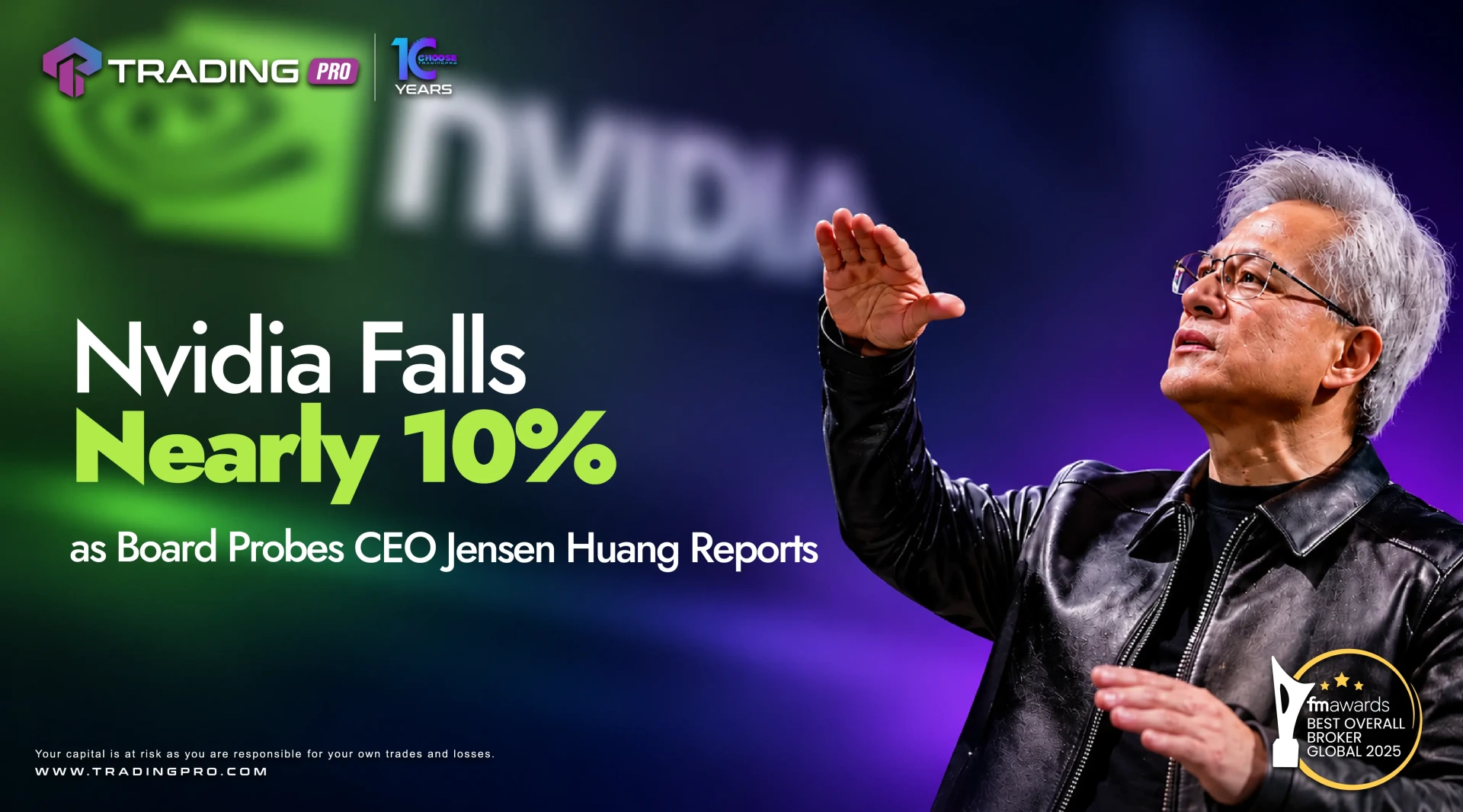
Nvidia shares fell nearly 10% over two trading sessions on 9 and 10 November after the company's board launched an independent investigation into reports involving CEO Jensen Huang. The sell-off raised questions about leadership uncertainty at the world's leading AI chipmaker, while a hotter-than-expected US inflation report added pressure to the broader stock market on Tuesday.
The developments have put Nvidia under scrutiny, with investors watching the board's investigation, potential leadership implications and the wider impact on the semiconductor industry.
What Happened: Huang's Memo and the Board Investigation
Jensen Huang at Nvidia GTC Taipei 2026.
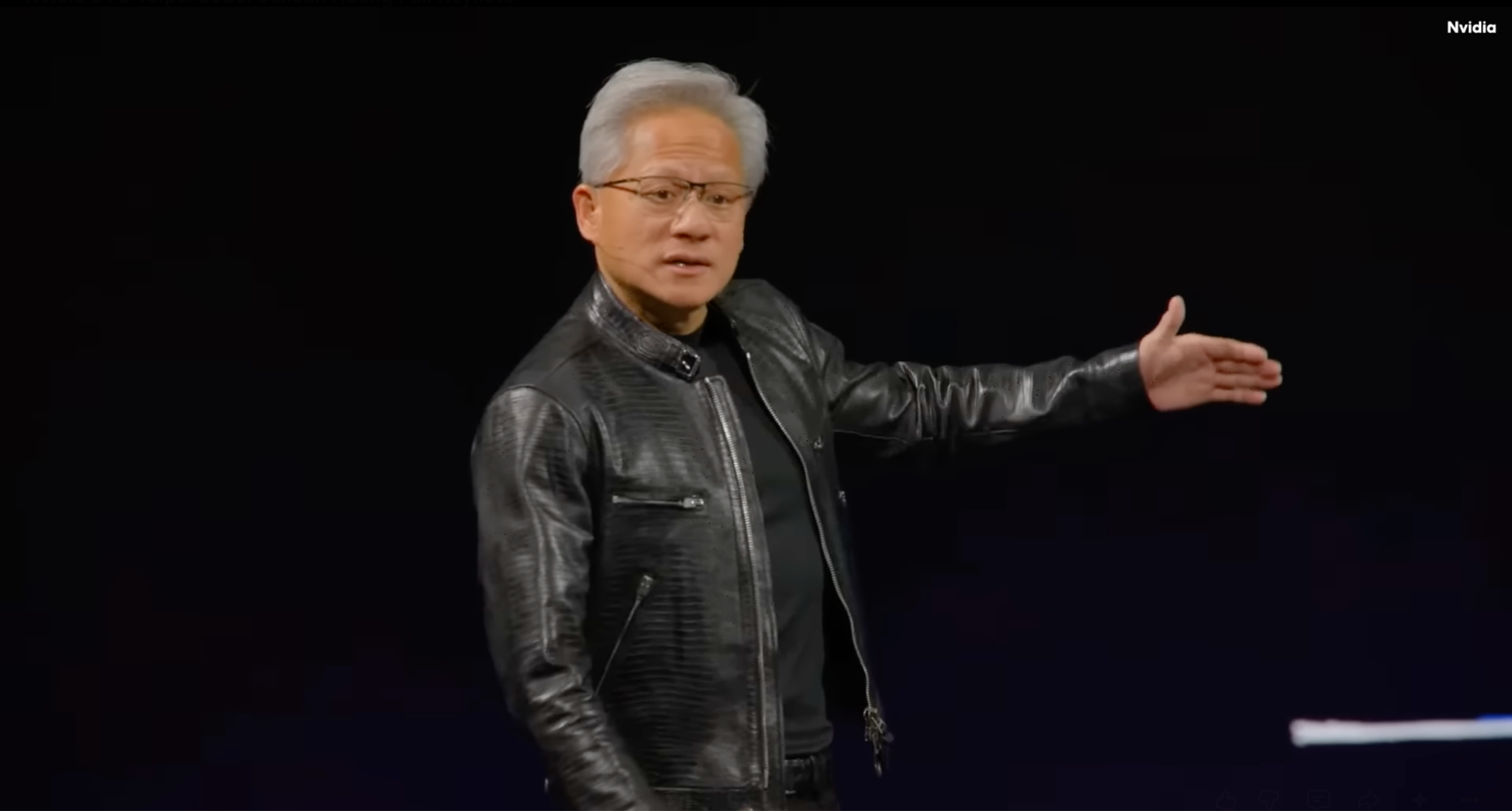
Jensen Huang at Nvidia GTC Taipei 2026
On Sunday, 8 November, Huang sent a memo to Nvidia employees acknowledging that he had been unfaithful to his wife. He apologised to his family and staff, while reaffirming his commitment to the company and agreeing to cooperate with the board's review.
Separately, reports raised questions about Huang's relationship with a business executive linked to Megaspeed International, a Singapore-based Nvidia customer. US officials reportedly suspect the executive of gathering information for Beijing, prompting concerns about a possible foreign intelligence operation. The allegations were detailed in Reuters' coverage of the investigation.
Nvidia's board subsequently confirmed that it had launched an independent investigation. A committee of independent directors, assisted by external legal counsel, will oversee the review.
The board also stated that it had no reason to believe that US national security or Nvidia's confidential information had been compromised. Its official statement confirmed that Huang supports the investigation and has committed to cooperating fully.
The allegations surrounding the reported relationship and potential intelligence activity remain under investigation. No public findings have established that Huang disclosed trade secrets or compromised national security.
Nvidia, meanwhile, has expressed confidence in Huang's leadership. The company's co-founder, who has served as CEO since its establishment in 1993, remains central to its strategy and public identity. His position has therefore become a key consideration for investors as the investigation progresses.
Nvidia Falls Nearly 10% in Two Sessions
Nvidia's share price came under immediate pressure following the developments.
The stock closed 4.27% lower on Monday, 9 November, despite a strong rally across Wall Street. The S&P 500 gained 2.35%, while the Nasdaq Composite climbed 2.74%.
The decline continued on Tuesday, 10 November, when Nvidia shares dropped another 5.47%. This brought the combined loss over the two sessions to approximately 9.5%.
The contrast with the broader market rally on Monday suggested that Nvidia was facing company-specific concerns rather than simply following the wider technology sector.
The latest losses also came after Nvidia shares had already fallen approximately 9.26% on 5 November, amid wider pressure on AI-related stocks and concerns surrounding the sector's outlook.
What Analysts Are Saying
The main concern among analysts is how the investigation could affect Nvidia's leadership and its position within the global AI industry.
Dan Ives of Yorkville Ives & Co. described the situation as a "black eye moment" for Huang. He warned that the investigation could create an overhang on Nvidia shares as investors wait for further developments.
The question of succession has also become a talking point. Gene Munster of Deepwater Asset Management estimated that investors were pricing in roughly a 25% chance of Huang leaving the company, compared with his own assessment of 10% to 15%.
Russell Pillemer, CEO of Pengana Capital, described Huang as the "intellect" behind Nvidia and questioned whether the company had an obvious successor capable of filling his role.
These concerns were also explored in The Motley Fool's analysis of what could happen if Huang steps down, which examined the potential implications for Nvidia's leadership and its long-term business outlook.
Corporate governance is another important consideration. The situation has moved beyond a personal matter and become an issue of corporate oversight, particularly given Huang's influence over Nvidia's growth and strategic direction.
Taken together, these assessments suggest that uncertainty surrounding Huang's future could remain an important factor for Nvidia shares until the board reaches a conclusion.
Legal and Political Pressure Builds
The investigation has also attracted attention from shareholders and US lawmakers.
A proposed securities class action against Nvidia and Huang has been filed by a shareholder in federal court in San Jose, California. The complaint alleges that investors were misled by statements or omissions relating to the issues now under scrutiny. These remain allegations and have not been established in court.
Political attention is also increasing. Three Republican congressional leaders have requested a closed-door briefing with Huang on 18 November concerning his interactions with a Megaspeed executive and the wider national security questions surrounding the reports.
The Reuters report on the congressional request outlines the lawmakers' concerns about potential access to sensitive US technology and information.
The combination of an internal investigation, shareholder litigation and congressional interest adds another layer of uncertainty for Nvidia.
Market Impact: Indexes and Chip Peers
Nvidia's decline contributed to Tuesday's broader market weakness, although the session was also affected by fresh inflation figures.
At the close on 10 November, the major US indexes recorded the following losses:
- S&P 500: Fell 0.38% to 7,520.93.
- Nasdaq Composite: Dropped 0.74% to 25,065.87.
- Dow Jones Industrial Average: Declined 0.30% to 52,231.89.
Technology stocks were the weakest-performing of the 11 S&P 500 sectors, falling 1.4%.
However, Nvidia's losses did not translate into uniform weakness across the semiconductor industry. Some chipmakers, including Broadcom and AMD, recorded gains during Tuesday's session, suggesting that investors were also distinguishing between company-specific developments and the broader outlook for AI hardware.
The inflation report added to the market pressure. October's US Consumer Price Index (CPI) increased 0.4% month over month, above the 0.3% expected by economists. Core CPI, which excludes food and energy, rose 0.3%, compared with forecasts of 0.2%.
The stronger-than-expected figures pushed Treasury yields higher and increased expectations of further Federal Reserve tightening. The market recap from Anadolu Agency provides further details on Nvidia's performance and the market's reaction to the inflation data.
As a result, Tuesday's market decline reflected two separate concerns: uncertainty surrounding Nvidia's leadership and renewed pressure on equities from inflation and interest rate expectations.
Where This Fits in the AI Trade
Nvidia's latest decline comes during a period of increased volatility across AI-related stocks.
On 5 November, Nvidia fell approximately 9.26% amid concerns about AI investment, valuations and potential regulatory developments. The wider market subsequently recovered on 9 November, with the S&P 500 and Nasdaq posting strong gains as oil prices eased.
Nvidia's inability to participate in that rebound highlighted the extent to which the company's latest decline was tied to its own circumstances.
The situation also raises a broader question for the AI industry: how much of Nvidia's market value and strategic importance is tied to Huang personally?
As the company's CEO and most recognisable spokesperson, Huang has played a central role in Nvidia's growth and its position in the AI market. Any uncertainty surrounding his leadership could therefore influence investor sentiment, even if the company's underlying business remains strong.
For now, the investigation adds another source of risk to an already volatile AI trade, with investors balancing Nvidia's long-term growth prospects against questions surrounding governance and leadership.
Market Snapshot
Nvidia and the major US indexes on 10 November 2026
| Asset | Closing performance |
| Nvidia (9 November) | -4.27% |
| Nvidia (10 November) | -5.47% |
| Nvidia (two-session decline) | Approx -9.5% |
| S&P 500 | 7,520.93 (-0.38%) |
| Nasdaq Composite | 25,065.87 (-0.74%) |
| Dow Jones | 52,231.89 (-0.30%) |
| S&P 500 Technology Sector | -1.4% |
What to Watch Next
Several developments could influence Nvidia's share price and the wider semiconductor market in the coming weeks.
The board investigation: The findings will be important in determining whether the current concerns surrounding Huang's position and the company's governance are resolved.
The 18 November congressional briefing: Investors will be watching whether Huang attends and whether further information emerges about the reported Megaspeed connection.
The shareholder lawsuit: Further court filings and developments in the proposed class action could add to the scrutiny facing Nvidia.
Huang's position at Nvidia: Any indication of a leadership change, succession planning or further statements from the board could influence investor confidence.
Other semiconductor stocks: Whether Nvidia's weakness remains company-specific or spreads to other chipmakers will be an important indicator of broader sector sentiment.
The Federal Reserve's 9 December decision: Following the hotter-than-expected October inflation report, investors will be assessing the implications for interest rates and valuations across technology stocks.
The Bottom Line
Nvidia's nearly 10% decline over two sessions reflects growing uncertainty following the revelations involving CEO Jensen Huang and the board's decision to launch an independent investigation.
While the potential leadership implications have become a major concern for investors, the broader semiconductor sector has shown some resilience. The latest market reaction also reflects wider economic pressures, particularly the stronger-than-expected US inflation report and expectations of further Federal Reserve action.
The board's findings, the congressional briefing scheduled for 18 November and any developments concerning Huang's position will be key events to watch as investors assess Nvidia's next move.
More Market News and Updates
For further coverage of global financial markets, technology stocks and economic developments, follow TradingPRO on social media for the latest news, market updates and trading education.


